
As Governor-elect Gina Hinojosa prepares to take office, her promise of a more data-driven approach to public safety is raising questions about how Texas addresses juvenile crime — including whether more investment in prevention could help keep young people out of the justice system in the first place.
Collective Action for Youth focuses on mentorship, job training and building relationships with young people who may be facing challenges that put them at risk of getting involved in the juvenile justice system.
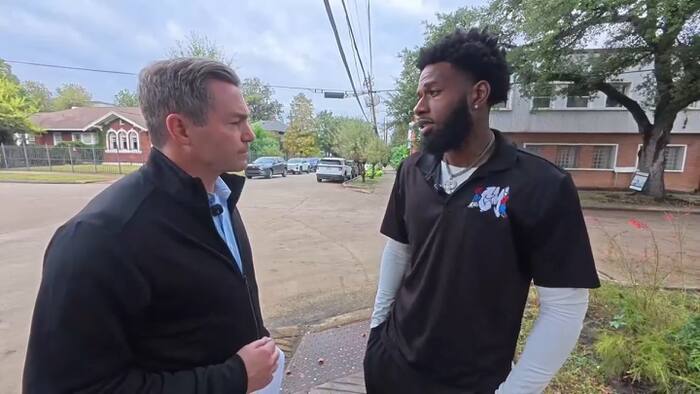
For Devante Pope, a credible messenger with the organization, the work is personal. He draws on his own life experiences to build trust with young people and help them see opportunities beyond their current circumstances.
“Juvenile crime prevention is public safety, right? I do believe that when you make a space and embrace a space for young people to thrive, you make it a safer community for Texas,” Pope said.
The numbers underscore the scale of the challenge.
In 2024, 38,123 individual young people were referred to Texas juvenile probation departments, according to the Texas Juvenile Justice Department. Those young people accounted for 50,472 formal referrals, meaning some were referred more than once.
Advocates say reaching young people before their behavior escalates can make a difference — particularly when they are dealing with negative peer influences, exposure to violence, trauma or declining grades.
Arion Whittle, a graduate of Collective Action for Youth’s program, knows firsthand how important that support can be.
She entered the program looking for direction. About a year later, she had earned a medical assistant certification and landed a job in medical administration.
“Minors need prevention before they need punishment,” Whittle said.
She believes warning signs should prompt adults and communities to offer support, not immediately label a young person as a problem.
“These behaviors don’t necessarily deem that a minor is subject to criminalization,” Whittle said.
Without positive influences and role models, she said, young people can become products of the environments around them.
Whittle credits the support she received through Collective Action for Youth with helping change her trajectory.
Pope wants more young people to have access to those same opportunities, including summer programs and trade school pathways.
The broader question now is how much emphasis Texas will place on those types of programs as Hinojosa prepares to lead the state.
For advocates, the challenge is turning prevention into measurable public safety results: identifying which programs work, where gaps remain and whether state funding can expand efforts that demonstrate a meaningful impact.
Their argument is straightforward: investing in young people before they enter the justice system can also be an investment in safer communities.
The conversation around juvenile crime prevention will continue this weekend at the Youth Justice Summit in Houston.
Hosted by Collective Action for Youth, the event will bring together young people, members of its Juvenile Justice Advisory Board, community advocates, mentors and organizations working to transform the juvenile justice system.
The summit is scheduled for Saturday, Nov. 14, from 11 a.m. to 4 p.m. at the Harris County Department of Education, 6300 Irvington Boulevard.
Attendees will take part in interactive workshops, youth-led discussions and conversations focused on juvenile justice reform, youth empowerment and community-based solutions.
The event will also feature a screening of Voices from the Margins, a documentary highlighting the experiences and perspectives of young people impacted by the justice system.
Community organizations will be on hand to share resources related to education, housing, empowerment and other support services. Attendees will also have opportunities to hear directly from young people, mentors and advocates working to create better outcomes for youth.
Organizers say the summit is an opportunity to elevate the voices of young people while connecting families and communities with resources and potential solutions.


